



Synology
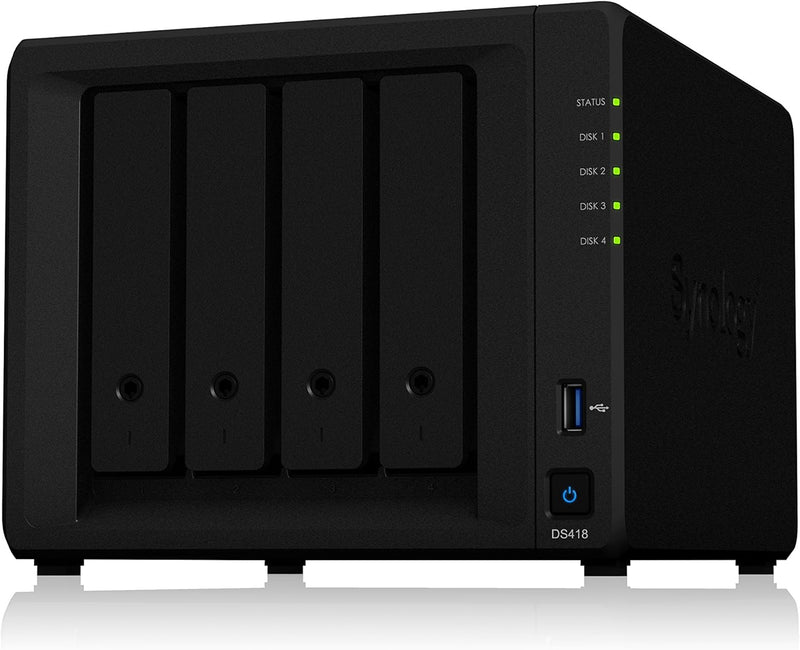
Synology DS418 4-Bay NAS: High-Performance DiskStation
3.5 inch2.5 inch
Quad-core NAS muscle delivers 226 MB/s reads and dual-1GbE failover for offices that can't afford downtime.
$699.99*
Check availability
*Price sourced from Amazon.com. Last updated:Aug 28, 2026.Price and availability are subject to change — details.
Affiliate Disclosure: As an Amazon Associate, Studio Supplies earns from qualifying purchases made through links on this page, at no additional cost to you. This helps support our editorial team.
Notice a mistake? Let Us Know
Overview
Key Features
Sequential throughput performance at over 226 MB/s reading and 170 MB/s writing
Dual 1GbE ports with failover and Link Aggregation support
Compatible Drive Type-3.5 inch SATA HDD, 2.5 inch SATA HDD, 2.5 inch SATA SSD. "Compatible drive type" indicates drives that have been tested to be compatible with Synology products. This term does not indicate the maximum connection speed of each drive bay
Check Synology knowledge center or YouTube channel for help on product setup and additional information
Check the product specification page for the software or application you want to use
Specifications
Number of Bays
4
Processor
64-bit quad-core
Sequential Read
Over 226 MB/s
Sequential Write
Over 170 MB/s
Network Ports
Dual 1GbE (failover + Link Aggregation)
Compatible Drive Types
3.5" SATA HDD, 2.5" SATA HDD, 2.5" SATA SSD
Drive Interface
SATA III
Frequently Asked Questions
What processor powers the DS418 and what does that mean for performance?
The DS418 runs a 64-bit quad-core processor. That core count matters specifically for concurrent tasks — multiple users accessing shares simultaneously, on-the-fly transcoding, and running DSM packages like Surveillance Station or Active Backup without degrading throughput.
Does the DS418 support Link Aggregation, and what throughput can I realistically expect?
Yes. The dual 1GbE ports support both failover and 802.3ad Link Aggregation. With a managed switch and aggregation enabled, real-world sequential reads can hit the rated 226 MB/s; writes top out around 170 MB/s — both figures assuming fast spinning drives or SSDs in the bays.
What drive types are compatible with the DS418's four bays?
The DS418 accepts 3.5-inch SATA HDDs, 2.5-inch SATA HDDs, and 2.5-inch SATA SSDs. Note that "compatible" means Synology-tested interoperability — it does not indicate the maximum rated speed of each interface, which remains SATA III (6 Gb/s).
Can the DS418 transcode 4K video?
Yes. The quad-core SoC includes hardware-accelerated 4K transcoding, allowing Plex or Synology's Video Station to serve 4K streams without saturating all CPU cores on software decode alone.
How many drives can fail before data is lost, and what RAID options are available?
With four bays, DSM supports RAID 5 (one drive fault tolerance), RAID 6 (two drive fault tolerance), RAID 10, and Synology Hybrid RAID. RAID 6 is the most resilient but reduces usable capacity by two drive equivalents.
Related Products
