

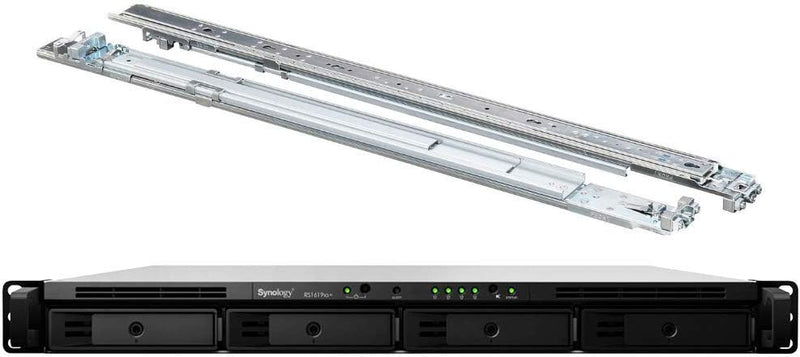


Synology
Synology RS1619xs+ iSCSI Xeon NAS Server
16GB DDR4USB 3.0
An Intel Xeon-powered 1U RackStation with redundant power, M.2 SSD caching, and Btrfs LUN support — built for mission-critical virtualization and iSCSI workloads.
$5,739.00*
View on Amazon
✓ In Stock on Amazon.com
*Price sourced from Amazon.com. Last updated:Aug 28, 2026.Price and availability are subject to change — details.
Affiliate Disclosure: As an Amazon Associate, Studio Supplies earns from qualifying purchases made through links on this page, at no additional cost to you. This helps support our editorial team.
Notice a mistake? Let Us Know
Overview
Key Features
Synology RackStation RS1619xs+, made for a variety of server roles such as iSCSI targets backup, virtualization, file storage, email servers, and domain controllers!
Intel Xeon D-1527 Quad-Core 2.2GHz 6MB CPU; 16GB DDR4 PC4-17000 2133MHz Memory; 1TB (2 x 500GB) SATA III M.2 Solid State Drives for Ultra Fast Storage; 8TB (4 x 2TB) 7.2K 6Gb/s SATA 3.5" HDDs for High Capacity Storage; 4 x RJ-45 1GbE LAN Port (with Link Aggregation / Failover support); 2 x USB 3.0 Port; 1 x Expansion Port, Btrf File System for Advanced LUN iSCSI Service
Operating System: Synology DSM Software
Synology NAS chassis comes in a sealed box.
Hard drives and memory upgrades included separately NOT installed, installation required.
Specifications
Model
RS1619xs+
CPU
Intel Xeon D-1527 Quad-Core 2.2GHz 6MB
Memory
16GB DDR4 PC4-17000 2133MHz
M.2 SSD Capacity
1TB (2 x 500GB) SATA III
HDD Capacity
8TB (4 x 2TB) 7.2K 6Gb/s SATA 3.5"
LAN Ports
4 x RJ-45 1GbE (with Link Aggregation / Failover)
USB Ports
2 x USB 3.0
Expansion Ports
1
File System
Btrf (for Advanced LUN iSCSI Service)
Operating System
Synology DSM Software
Similar Products
Other products from the same family that visitors often consider:
 ✓ Available
Synology RS1619xs13 RackStation iSCSI NAS Server
$5,739.00
View on Amazon → ✓ Available
Synology RS1619xs+ 4-Bay NAS Rackstation (Diskless)
View on Amazon → ✓ Available
Synology RS1619xs+ NAS Rackstation 4-Bay Diskless
$3,364.22
View on Amazon → ✓ Available
Synology DS3622xs+ 216TB NAS Server 10GbE Xeon 48GB
$12,789.00
View on Amazon →Frequently Asked Questions
What CPU is in the RS1619xs+ and what does that mean for virtualization workloads?
The RS1619xs+ runs an Intel Xeon D-1527 Quad-Core at 2.2GHz with a 6MB L3 cache. The Xeon D series is a server-class SoC with ECC memory support and hardware virtualization extensions (VT-x, VT-d) — both required for running virtual machines reliably. Unlike the Celeron or Atom processors in prosumer NAS units, the D-1527 can handle concurrent VM instances, iSCSI target service, and active backup jobs without CPU contention.
What is the role of the M.2 SSDs in this configuration?
The two 500GB M.2 SATA III SSDs (totaling 1TB) function as a high-speed storage tier separate from the 3.5" HDD array. In Synology DSM, M.2 slots are typically used for SSD caching (read/write cache for the HDD volume) or as a dedicated volume for high-IOPS workloads. SATA III M.2 tops out at ~550MB/s per drive — significantly faster than the 7,200 RPM HDDs (~150MB/s sequential), making the SSD tier the correct target for database files, VM disk images, or frequently accessed data.
Does the RS1619xs+ support 10GbE networking out of the box?
No — the base configuration includes four RJ-45 1GbE ports with Link Aggregation (LACP) and failover support. With four ports aggregated via 802.3ad LACP, maximum theoretical throughput is 4Gbps, though real-world performance is typically 2–2.5Gbps for large sequential transfers. 10GbE expansion requires an add-in network card via the expansion slot.
What does the Btrfs file system enable on this unit that EXT4 does not?
Btrfs (B-tree filesystem) enables advanced LUN and iSCSI capabilities including snapshot-based LUN cloning, thin provisioning, and self-healing checksums for data integrity. For iSCSI target deployments — where the NAS presents block storage to VMware ESXi, Hyper-V, or another server — Btrfs LUNs support writable snapshots and instant LUN cloning without full data copies, which EXT4 volumes cannot do natively in DSM.
Are the hard drives and memory pre-installed in this unit?
No. Per the product listing, the hard drives and memory upgrades are included separately and are not pre-installed — installation is required. The chassis ships sealed, and the listed HDDs (4 x 2TB) and memory (16GB DDR4) are bundled accessories that must be physically installed before first use.
Related Products
