



Synology
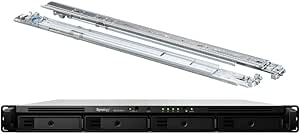
Synology RS1619xs13 RackStation iSCSI NAS Server
16GB DDR4USB 3.0
Enterprise-grade iSCSI NAS with Xeon D-1527, redundant PSU, and Btrfs LUN support built for virtualization and backup workloads that can't afford downtime.
$5,739.00*
View on Amazon
✓ In Stock on Amazon.com
*Price sourced from Amazon.com. Last updated:Aug 28, 2026.Price and availability are subject to change — details.
Affiliate Disclosure: As an Amazon Associate, Studio Supplies earns from qualifying purchases made through links on this page, at no additional cost to you. This helps support our editorial team.
Notice a mistake? Let Us Know
Overview
Key Features
Synology RackStation RS1619xs+, made for a variety of server roles such as iSCSI targets backup, virtualization, file storage, email servers, and domain controllers!
Intel Xeon D-1527 Quad-Core 2.2GHz 6MB CPU; 16GB DDR4 PC4-17000 2133MHz Memory; 1TB (2 x 500GB) SATA III M.2 Solid State Drives for Ultra Fast Storage; 8TB (4 x 2TB) 7.2K 6Gb/s SATA 3.5" HDDs for High Capacity Storage; 4 x RJ-45 1GbE LAN Port (with Link Aggregation / Failover support); 2 x USB 3.0 Port; 1 x Expansion Port, Btrf File System for Advanced LUN iSCSI Service
Operating System: Synology DSM Software
Synology NAS chassis comes in a sealed box.
Hard drives and memory upgrades included separately NOT installed, installation required.
Specifications
Form Factor
1U Rack Mountable
Processor
Intel Xeon D-1527 Quad-Core 2.2GHz, 6MB Cache
Memory
Up to 64GB DDR4 PC4-17000 2133MHz (ECC)
Drive Bays
4 × 3.5" SATA
M.2 Slots
2 × SATA III M.2 (SSD cache or storage)
Network Ports
4 × RJ-45 1GbE (Link Aggregation / Failover)
USB Ports
2 × USB 3.0
Expansion Port
1 × Expansion Port
File System
EXT4, Btrfs
Power Supply
Redundant
Operating System
Synology DSM
Included Accessories
Synology Sliding Rail Kit
Similar Products
Other products from the same family that visitors often consider:
 ✓ Available
Synology RS1619xs+ iSCSI Xeon NAS Server
$5,739.00
View on Amazon → Currently Unavailable
Synology RS3412RPxs RackStation 10-Bay NAS Server (Diskless)
Check on Amazon → Currently Unavailable
Synology RS2423RP+ 12-Bay RackStation - Diskless NAS Server
Check on Amazon → Currently Unavailable
Synology RS815+ 4 Bay RackStation NAS
Check on Amazon → Currently Unavailable
Synology RS3617RPxs RackStation NAS - Diskless
Check on Amazon →Frequently Asked Questions
What CPU and memory does the RS1619xs+ ship with, and what does that mean for concurrent workloads?
The RS1619xs+ runs an Intel Xeon D-1527 quad-core at 2.2GHz with up to 64GB DDR4-2133. That Xeon D-series chip is purpose-built for NAS and edge server duty — it carries ECC memory support, meaning bit-flip errors in RAM are detected and corrected before they corrupt data. For environments running simultaneous iSCSI targets, virtual machine datastores, and active backup jobs, the ECC support alone justifies the platform.
Does this unit support 10GbE, or am I limited to the four 1GbE ports?
The base configuration ships with 4× RJ-45 1GbE ports with link aggregation (LACP) and failover support. There is no built-in 10GbE — to reach 10G throughput you would need to add a compatible PCIe NIC via the expansion slot. For most SMB iSCSI targets, bonded 1GbE delivers sufficient bandwidth, but high-density VMware or Hyper-V environments will feel that ceiling quickly.
How many drive bays does the RS1619xs+ have, and what's the raw capacity ceiling?
The RS1619xs+ is a 4-bay 1U unit. With current 20TB SATA 3.5" drives and additional M.2 NVMe cache SSDs, you can reach roughly 80TB raw in the main chassis. The single expansion port supports Synology DX517 or similar expansion units to add up to 5 more drives per unit, significantly extending total capacity.
Is the RS1619xs+ compatible with VMware vSphere or Microsoft Hyper-V as an iSCSI target?
Yes. The RS1619xs+ supports iSCSI LUN presentation via Synology DSM, which is certified compatible with VMware vSphere (including VAAI primitives) and Microsoft Hyper-V. Btrfs volumes enable LUN thin provisioning and snapshot acceleration. VAAI offload reduces CPU overhead on the ESXi host side during large block operations.
Does this ship with drives and memory installed?
No — per the listing, hard drives and memory upgrades are included in the box but not pre-installed. You will need to seat the drives and DIMMs before first boot. This is straightforward: Synology's tool-less tray system handles 3.5" HDDs, and the M.2 slots are accessible after removing the top panel.
Related Products
