

GoProfessional Cases
Teltonika RUTM20 Compact 5G Industrial Cellular Router
Sub-6GHz 5G with global Telit modem and dual SIM plus eSIM failover, engineered for remote industrial sites from -40°C to 75°C
$529.00*
View on Amazon
✓ In Stock on Amazon.com
*Price sourced from Amazon.com. Last updated:Aug 17, 2026.Price and availability are subject to change — details.
Affiliate Disclosure: As an Amazon Associate, Studio Supplies earns from qualifying purchases made through links on this page, at no additional cost to you. This helps support our editorial team.
Notice a mistake? Let Us Know
Overview
Key Features
5G Sub-6Ghz SA/NSA 2.5/3.4Gbps DL (4x4 MIMO), 900/550 Mbps UL (2x2); 4G (LTE) – LTE Cat 19 1.6Gbps DL, LTE Cat 18 211Mbps UL; 3G – 42 Mbps DL, 5.7Mbps UL
Dual SIM & eSIM ensure uptime with automatic failover and remote carrier switching
Active PoE simplify deployment with PoE in/out
802.11b/g/n/ac Wave 2 (Wi-Fi 5) with data transmission rates up to 867 Mbps (Dual Band, MU-MIMO), 802.11r fast transition, Access Point (AP), Station (STA)
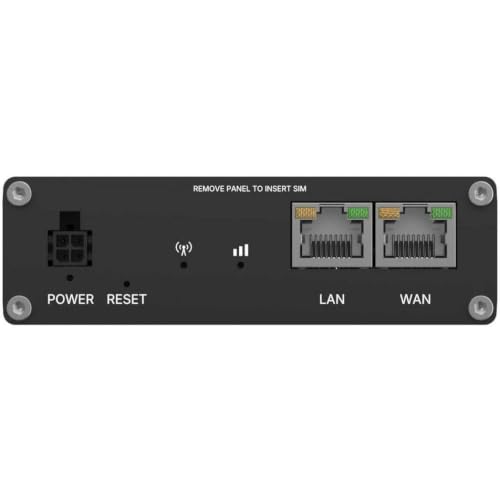
1 x WAN & 1 LAN port 10/100/1000 Mbps, compliance with IEEE 802.3, IEEE 802.3u, 802.3az standards, supports auto MDI/MDIX crossover
Antennas: 4 x SMA for Mobile, 2 x RP-SMA for Wi-Fi
Operating temperature: -40 °C to 75 °C
Operating humidity: 10% to 90% non-condensing / Ingress Protection Rating: IP30
Regulatory & Type Approvals: CE, UKCA, CB, RCM, FCC, WEEE, PTCRB
Specifications
Model
RUTM20 (RUTM20100300)
Cellular
5G Sub-6GHz SA/NSA, up to 2.5/3.4Gbps DL, 900/550 Mbps UL
LTE
Cat 19 up to 1.6Gbps DL, Cat 18 up to 211Mbps UL
3G
42 Mbps DL, 5.7 Mbps UL
SIM
Dual SIM and eSIM with automatic failover
Wi-Fi
802.11b/g/n/ac Wave 2 (Wi-Fi 5), dual band, MU-MIMO up to 867 Mbps
Ethernet
1x WAN and 1x LAN, 10/100/1000 Mbps
Power
Active PoE in and out
Antennas
4x SMA cellular, 2x RP-SMA Wi-Fi
Operating Temperature
-40 °C to 75 °C
Ingress Protection
IP30, 10% to 90% non-condensing humidity
Approvals
CE, UKCA, CB, RCM, FCC, WEEE, PTCRB
Frequently Asked Questions
How does the RUTM20 keep a connection alive if one carrier drops?
It uses dual SIM plus eSIM with automatic failover, and it supports remote carrier switching so you can change providers without visiting the site.
What are the realistic top speeds on 5G?
The global Telit modem supports Sub-6GHz 5G with downlink up to 2.5/3.4Gbps and 4x4 MIMO, with uplink up to 900/550 Mbps under favorable conditions.
Can this router be deployed outdoors or in harsh environments?
It operates from -40°C to 75°C, which suits enclosures and cabinets, but its IP30 rating means it is not sealed against water, so it needs a protective housing outdoors.
Does it support Wi-Fi 6?
No, it uses Wi-Fi 5 (802.11ac Wave 2) dual-band with MU-MIMO at up to 867 Mbps, so buyers needing Wi-Fi 6 features should consider a different model.
How many wired ports does it have?
It provides one gigabit WAN and one gigabit LAN port at 10/100/1000 Mbps, so additional wired devices require a separate switch.
Is it approved for use in multiple regions?
Yes, it carries CE, UKCA, CB, RCM, FCC, WEEE, and PTCRB approvals, supporting deployments across several regulatory regions.
Related Products


