

Toshiba
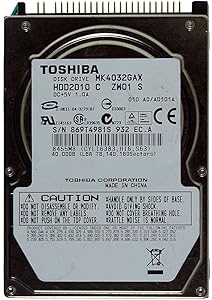
Toshiba MK4032GAX 40GB 2.5-Inch Notebook HDD
Reliable Storage for Your NotebookThe Toshiba MK4032GAX 40GB Notebook Hard Drive provides a reliable storage solution for your laptop. With its UDMA/100 interface and 5400RPM speed, this 2.5-inch drive offers fast data access and ample space for your files and applications. Specifications: Bra...
$19.99*
Check availability
*Price sourced from Amazon.com. Last updated:Aug 31, 2026.Price and availability are subject to change — details.
Affiliate Disclosure: As an Amazon Associate, Studio Supplies earns from qualifying purchases made through links on this page, at no additional cost to you. This helps support our editorial team.
Notice a mistake? Let Us Know
Overview
Reliable Storage for Your Notebook
The Toshiba MK4032GAX 40GB Notebook Hard Drive provides a reliable storage solution for your laptop. With its UDMA/100 interface and 5400RPM speed, this 2.5-inch drive offers fast data access and ample space for your files and applications.
Specifications:
- Brand: Toshiba
- Model: MK4032GAX
- Capacity: 40GB
- Interface: UDMA/100
- Speed: 5400RPM
- Buffer: 8MB
- Form Factor: 2.5-Inch
Key Features
Toshiba 40 GB Notebook Hard Drive General Features: 40 GB formatted capacity UDMA/100
5400 RPM spindle speed 8 MB buffer 12 ms average seek time 2.5-inch form factor 9.5 mm drive height
Power Specifications: DC+5V 1.0A Regulatory Approvals: CE UL CSA C-Tick MIC BSMI TUV
Specifications
Formatted Capacity
40 GB
Interface
UDMA/100
Spindle Speed
5400 RPM
Buffer
8 MB
Average Seek Time
12 ms
Form Factor
2.5-inch
Drive Height
9.5 mm
Power Specification
DC+5V 1.0A
Regulatory Approvals
CE, UL, CSA, C-Tick, MIC, BSMI, TUV
Frequently Asked Questions
What is the storage capacity of the Toshiba MK4032GAX hard drive?
The Toshiba MK4032GAX offers a 40 GB formatted storage capacity, which is suitable for basic storage requirements in older notebooks.
Is this hard drive compatible with modern laptops?
While it is a 2.5-inch form factor, the 40 GB capacity, 5400 RPM speed, and UDMA/100 interface are generally considered outdated for modern laptops, which typically use larger, faster drives with SATA interfaces.
What is the spindle speed of this notebook hard drive?
This Toshiba notebook hard drive operates at a spindle speed of 5400 RPM, providing a balance between power consumption and performance for its generation.
How much buffer memory does the Toshiba MK4032GAX have?
The Toshiba MK4032GAX is equipped with an 8 MB buffer, which helps to temporarily store data for more efficient read and write operations.
What are the physical dimensions of this hard drive?
This hard drive has a 2.5-inch form factor and a drive height of 9.5 mm, making it a standard size for many older notebook computers.
Related Products
