

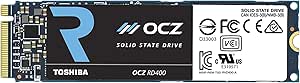
Toshiba
Toshiba RVD400-M22280-128G OCZ RD400 128GB NVMe SSD
128GB NVMe
Experience Next-Level Storage PerformanceThe Toshiba OCZ RD400 Series Solid State Drive is engineered to redefine high-performance storage for enthusiasts and hardcore gamers. This PCIe NVMe M.2 SSD delivers lightning-fast speeds and responsiveness, taking your computing experience to a new level...
$335.00*
Check availability
*Price sourced from Amazon.com. Last updated:Aug 28, 2026.Price and availability are subject to change — details.
Affiliate Disclosure: As an Amazon Associate, Studio Supplies earns from qualifying purchases made through links on this page, at no additional cost to you. This helps support our editorial team.
Notice a mistake? Let Us Know
Overview
Experience Next-Level Storage Performance
The Toshiba OCZ RD400 Series Solid State Drive is engineered to redefine high-performance storage for enthusiasts and hardcore gamers. This PCIe NVMe M.2 SSD delivers lightning-fast speeds and responsiveness, taking your computing experience to a new level.
Key Features:- Capacity: 128GB
- Interface: PCIe NVMe M.2
- Flash Type: MLC Flash
Key Features
Next Generation M.2 SSD Based on NVMe Protocol (PCIe, Gen. 3 x 4), Designed For Mobile, Desktop, and Workstation Applications
Sequential Read: Up to 2,200 MB/s; Sequential Write: Up to 620 MB/s; Random Read: Up to 170,000 4KiB IOPS; Random Write: Up to 110,000 4KiB IOPS
NVMe Compliant: Say Good Bye To Legacy Storage Buses; PCI Express Gen. 3x 4: The PCIe Performance Surpass The SATA Bottleneck Once and For All
M.2 2280 Compliant: Latest SSD Form Factor For Your Next Gen System Build; Low Power Mode: Requires Less Power When Drive Is In Standby Mode
Custom Drivers: RD400 Utilizes Custom High Performance Drivers; PCIe Adaptor Card With M.2 Module; 5 Years Advanced Warranty Program
Specifications
Capacity
128GB
Interface
NVMe (PCIe Gen. 3 x 4)
Form Factor
M.2 2280
Sequential Read Speed
Up to 2,200 MB/s
Sequential Write Speed
Up to 620 MB/s
Random Read IOPS
Up to 170,000 4KiB IOPS
Random Write IOPS
Up to 110,000 4KiB IOPS
Brand
Toshiba OCZ
Warranty
5 Years Advanced Warranty Program
Frequently Asked Questions
What kind of performance can I expect from the Toshiba OCZ RD400 SSD?
The Toshiba OCZ RD400 SSD offers high performance with sequential read speeds up to 2,200 MB/s and sequential write speeds up to 620 MB/s, thanks to its NVMe and PCIe Gen. 3 x 4 interface.
Is this SSD compatible with older motherboards that do not have an M.2 slot?
Yes, this SSD comes with a PCIe Adaptor Card, allowing it to be installed in a PCIe slot on motherboards that may not have a native M.2 slot.
What is the storage capacity of this Toshiba OCZ RD400 SSD?
This particular model of the Toshiba OCZ RD400 SSD offers a storage capacity of 128GB.
Does this SSD require any special drivers for operation?
Yes, the RD400 utilizes custom high-performance drivers to achieve its optimal speed and efficiency.
What does "NVMe Compliant" mean for this SSD?
NVMe Compliant means the SSD uses the Non-Volatile Memory Express protocol, which is designed for PCIe-based storage, providing much faster data transfer rates than older SATA interfaces by bypassing legacy storage buses.
Related Products


