



TP-Link
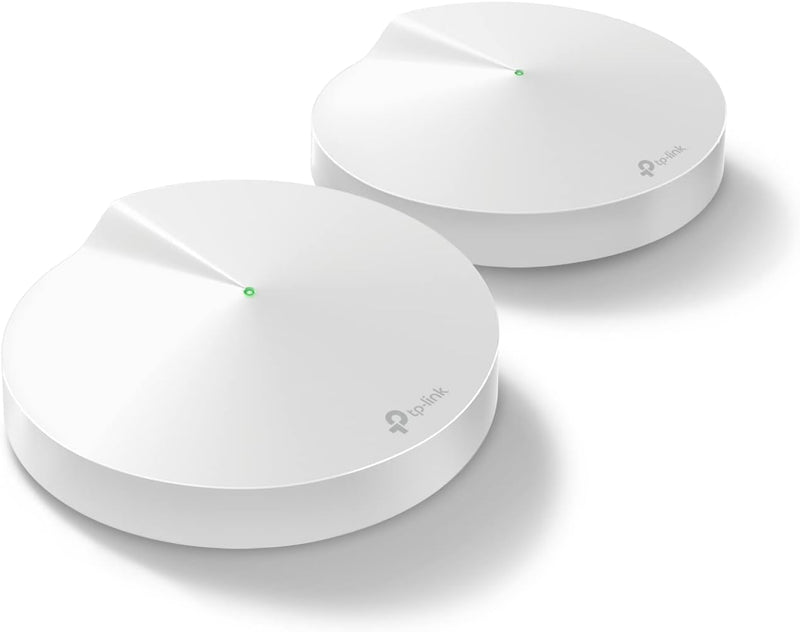
TP-Link Deco M5 (2-Pack) Mesh WiFi System
4 in
Whole-home mesh WiFi system that blankets up to 3,800 sq. ft. with seamless, secure coverage for over 60 devices.
$80.65*$129.99Save 37%
View on Amazon
✓ In Stock on Amazon.com
*Price sourced from Amazon.com. Last updated:Aug 31, 2026.Price and availability are subject to change — details.
Affiliate Disclosure: As an Amazon Associate, Studio Supplies earns from qualifying purchases made through links on this page, at no additional cost to you. This helps support our editorial team.
Notice a mistake? Let Us Know
Overview
Key Features
All TP-Link Deco Mesh WiFi can work together
If you're Looking to ditch your traditional router extender setup for a Whole Home WiFi system, put the TP-Link Deco M5 WiFi system on your short list PC mag said
Better Coverage than traditional WiFi routers: Deco M5 uses three units working seamlessly to create a mesh network that can cover homes up to 3,800 square feet. No Dead Zone anymore.
Seamless and Stable WiFi: Rather than wifi range extender that need multiple network names and passwords, Deco M5 allows you to enjoy seamless roaming throughout the house, with a single network name and password.
TP-Link unique Mesh technology automatically chooses the fastest path for every device and allows for more flexible placement than a satellite system
Secure WiFi Mesh Network: Protect your network and connected devices with a free lifetime subscription to TP-Link HomeCare featuring Next-level Antivirus, Robust Parental Controls, and QoS.
Easy to setup: Download the TP-Link Deco app, plug in your system, and follow the instructions to get your new home network up and running in minutes.Works with Amazon Alexa as well.
Each Deco M5 has 2 Gigabit Ethernet ports(4 in total for a 2-pack) and supports Wired Ethernet Backhaul for better speeds. Any of them can work as a Wi-Fi Router. Works with all internet service providers, such as AT&T, Verizon, Xfinity, Spectrum, RCN, Cox, CenturyLink, Frontier, etc.( a modem is required for most internet service providers)
Specifications
Brand
TP-Link
Model
Deco M5 (2-Pack)
WiFi Standard
IEEE 802.11 ac/n/a (5 GHz), IEEE 802.11 b/g/n (2.4 GHz)
Frequency Bands
2.4 GHz and 5 GHz
Signal Rate
400 Mbps (2.4 GHz) / 867 Mbps (5 GHz)
Processor
Quad-core CPU
Ethernet Ports
2 Gigabit LAN/WAN per unit (4 total)
Coverage
Up to 3,800 sq. ft.
Device Capacity
60+ devices
Mesh Technology
MU-MIMO, Auto Path Selection, Self-Healing, AP Steering, Band Steering, Beamforming
Security
TP-Link HomeCare (Antivirus, Parental Controls, QoS)
Compatibility
Amazon Alexa, all major ISPs
Backhaul
Wired Ethernet Backhaul supported
Power Supply
12V / 1.2A
Frequently Asked Questions
How many devices can the Deco M5 2-Pack support simultaneously?
The Deco M5 2-Pack is designed to support over 60 connected devices at once, using MU-MIMO technology and band steering to manage traffic efficiently across both the 2.4 GHz and 5 GHz bands.
Can I add more Deco units later to expand coverage?
Yes. All TP-Link Deco models are cross-compatible, so you can add additional Deco units of any model to extend your mesh network beyond the 3,800 sq. ft. this 2-pack covers.
Does the Deco M5 replace my existing router?
Yes. The Deco M5 functions as a full router replacement. You connect one unit directly to your modem, and it serves as both router and mesh access point. A separate modem is still required for most ISPs.
What is TP-Link HomeCare and does it cost extra?
HomeCare is a built-in security suite that includes antivirus protection powered by Trend Micro, parental controls with content filtering and time limits, and QoS bandwidth prioritization. It is included free for the lifetime of the device.
Can I use a wired Ethernet backhaul between the two units?
Yes. Each Deco M5 unit has two Gigabit Ethernet ports, and the system supports wired Ethernet backhaul, which can improve speeds and reduce wireless congestion between nodes.
Related Products


