

TP-Link
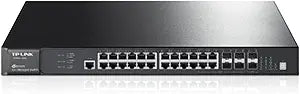
TP-Link T2700G-28TQ JetStream 28-Port Gigabit Stackable Switch
Build a Scalable and Robust Network The TP-LINK T2700G-28TQ is designed for high accessibility, scalability, and network robustness. This L2+ managed switch is equipped with 24 Gigabit RJ-45 ports, 4 Combo Gigabit SFP ports, and up to 4 10Gbps SFP slots, offering network administrators great fle...
$699.99*
View on Amazon
✓ In Stock on Amazon.com
*Price sourced from Amazon.com. Last updated:Aug 28, 2026.Price and availability are subject to change — details.
Affiliate Disclosure: As an Amazon Associate, Studio Supplies earns from qualifying purchases made through links on this page, at no additional cost to you. This helps support our editorial team.
Notice a mistake? Let Us Know
Overview
Build a Scalable and Robust Network
The TP-LINK T2700G-28TQ is designed for high accessibility, scalability, and network robustness. This L2+ managed switch is equipped with 24 Gigabit RJ-45 ports, 4 Combo Gigabit SFP ports, and up to 4 10Gbps SFP slots, offering network administrators great flexibility.
Specifications:
- Ports: 24 Gigabit RJ-45 ports, 4 Combo Gigabit SFP ports, Up to 4 10Gbps SFP slots
- Layer Support: L2+ Managed
- Layer 3 Features: Static routing and RIP v1/v2 (default), OSPF/ECMP/PIM/VRRP (with Layer 3 license upgrade)
- Stacking: Physical stacking (up to 8 units, 320Gbps backplane bandwidth)
- Power Supply: Removable power unit, optional redundant external power supply
- Security: Robust security features to help secure your enterprise network
Key Features
Basic Layer3 features like static routing and RIP v1/v2 by default and abundant Layer 3 features including OSPF/ECMP/PIM/VRRP with a Layer 3 license upgrade
True Physical Stacking technology supports up to 8 units and 320Gbps backplane bandwidth for high scalability and efficient redundancy
10 Gigabit Ethernet uplink provides high-bandwidth applications for congestion relief and smooth data delivery
Removable power unit and redundant power supply functionality minimizes downtime
Specifications
Model
T2700G-28TQ
Ports
28-Port Gigabit Ethernet
Stacking Support
Up to 8 units
Backplane Bandwidth
320Gbps (stacked)
Uplink Ports
10 Gigabit Ethernet
Power Supply
Removable, Redundant functionality
Layer 3 Features (Default)
Static routing, RIP v1/v2
Layer 3 Features (Upgrade)
OSPF, ECMP, PIM, VRRP (with license)
Frequently Asked Questions
Does this TP-Link switch support physical stacking?
Yes, the TP-Link T2700G-28TQ switch supports true physical stacking technology, allowing you to connect and manage up to 8 units.
What is the maximum backplane bandwidth when multiple units are stacked?
When stacked, the switch provides a 320Gbps backplane bandwidth, ensuring high scalability and efficient data flow between stacked units.
Are 10 Gigabit Ethernet uplinks included with this switch?
Yes, the switch features 10 Gigabit Ethernet uplinks, designed to provide high-bandwidth connections for demanding network applications.
Do advanced Layer 3 features come standard with the switch?
No, advanced Layer 3 features like OSPF, ECMP, PIM, and VRRP are available but require a separate Layer 3 license upgrade.
What measures does this switch have for minimizing downtime?
To minimize downtime, the TP-Link T2700G-28TQ switch is equipped with a removable power unit and offers redundant power supply functionality.
What basic Layer 3 features are available out of the box?
By default, the switch includes basic Layer 3 features such as static routing and RIP v1/v2, enabling essential network routing capabilities.
How many ports does this JetStream switch have?
This is a 28-Port Gigabit Stackable Switch, providing 28 Gigabit Ethernet ports for network connectivity.
Related Products


