



TP-Link
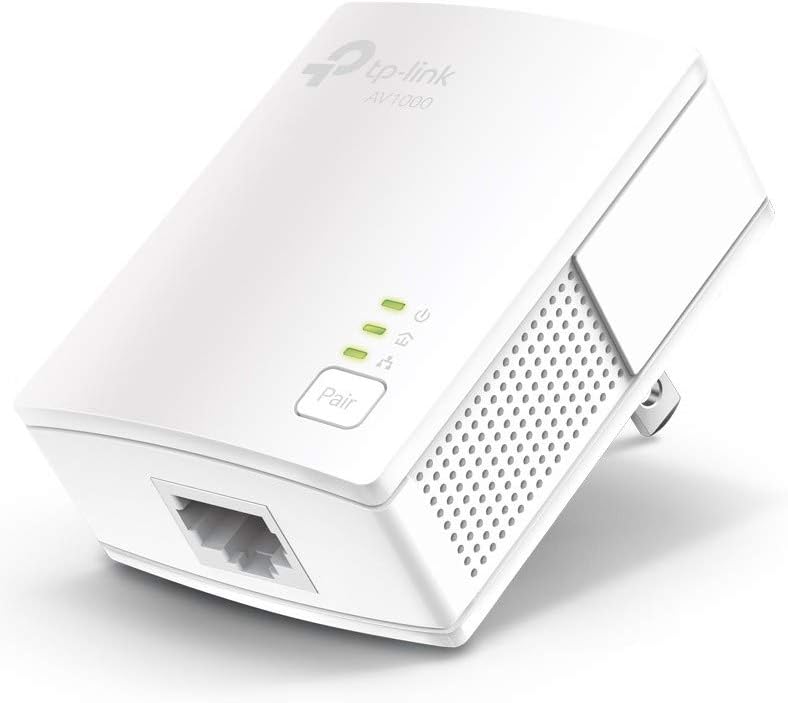
TP-Link TL-PA7017 AV1000 Gigabit Powerline Ethernet Adapter
Bring gigabit wired speeds to any room in your home using only the electrical outlets already in the walls.
$19.99*$23.99Save 16%
View on Amazon
✓ In Stock on Amazon.com
*Price sourced from Amazon.com. Last updated:Oct 23, 2026.Price and availability are subject to change — details.
Affiliate Disclosure: As an Amazon Associate, Studio Supplies earns from qualifying purchases made through links on this page, at no additional cost to you. This helps support our editorial team.
Notice a mistake? Let Us Know
Overview
Specifications
Model
TL-PA7017
Powerline Standard
AV1000
Ethernet Port
Gigabit
Product Type
Powerline Ethernet Adapter
Frequently Asked Questions
Does this adapter work as a standalone unit, or do I need to buy two?
This is an add-on unit — it requires a compatible AV1000 powerline adapter already connected to your router to function. The TL-PA7017 extends an existing powerline network; it is not a complete kit by itself.
What real-world throughput should I expect compared to the AV1000 spec?
The AV1000 rating is the theoretical maximum under ideal conditions on a short, clean electrical circuit. Real-world throughput on typical home wiring runs between 300–600 Mbps depending on distance between outlets, circuit quality, and electrical interference. For 4K streaming or gaming, this is more than sufficient; for sustained large file transfers, actual speed will vary by installation.
Does this adapter need any software or driver installation?
No. The TL-PA7017 uses plug-and-play setup — plug it into a wall outlet, connect your device via the gigabit Ethernet port, and it pairs automatically with other TP-Link AV1000 adapters on the same electrical circuit. No configuration software or driver installation is required.
Will this adapter degrade performance if plugged into a power strip or surge protector?
Yes — powerline adapters should always be plugged directly into a wall outlet. Power strips and surge protectors filter the electrical signal frequencies that powerline technology uses for data transmission, which significantly reduces throughput and reliability.
Is the TL-PA7017 compatible with powerline adapters from other brands or older TP-Link standards?
Interoperability with non-TP-Link AV1000 adapters is limited. While the HomePlug AV2 standard provides some cross-brand compatibility, TP-Link recommends pairing with other TP-Link AV1000 adapters for guaranteed performance. Mixing with older AV500 or AV200 adapters will cap the network to the lowest common standard.
Related Products


