



TP-Link
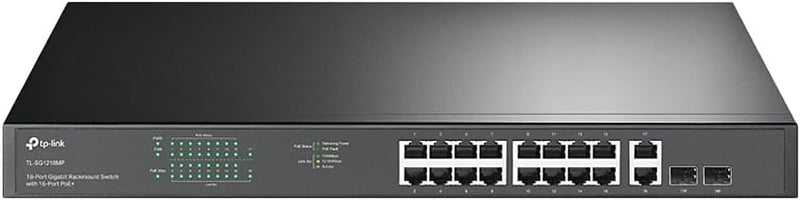
TP-Link TL-SG1218MP 16 Port Gigabit PoE Switch
★★★★★
30W250W
18-port gigabit switch delivering 250W of PoE+ power across 16 ports for IP cameras, access points, and VoIP phones.
$169.99*$185.99Save 8%
View on Amazon
✓ In Stock on Amazon.com
*Price sourced from Amazon.com. Last updated:Jul 14, 2026.Price and availability are subject to change.
Affiliate Disclosure: Studio Supplies may earn a commission from qualifying purchases made through links on this page, at no additional cost to you. This helps support our editorial team.
Notice a mistake? Let Us Know
Overview
Key Features
𝐅𝐥𝐞𝐱𝐢𝐛𝐥𝐞 𝐅𝐮𝐥𝐥 𝐆𝐢𝐠𝐚𝐛𝐢𝐭 𝟏𝟖-𝐏𝐨𝐫𝐭 𝐏𝐨𝐄 𝐂𝐨𝐧𝐟𝐢𝐠𝐮𝐫𝐚𝐭𝐢𝐨𝐧: 16x PoEplus (802.3at/af) 10/100/1000 Mbps RJ45 ports providing up to 30W per port and total PoE power budget of 250W, together w/ 2x Gigabit Non-PoE Ports and 2 Combo SFP Slot for high-speed connections.
𝐏𝐥𝐮𝐠 𝐚𝐧𝐝 𝐏𝐥𝐚𝐲: Easy setup with no software installation or configuration needed.
𝐀𝐝𝐯𝐚𝐧𝐜𝐞𝐝 𝐒𝐨𝐟𝐭𝐰𝐚𝐫𝐞 𝐅𝐞𝐚𝐭𝐮𝐫𝐞𝐬: Prioritize your traffic and guarantee high quality of video or voice data transmission with Port-based 802.1p/DSCP QoS and IGMP Snooping.
𝐒𝐭𝐮𝐫𝐝𝐲 𝐌𝐞𝐭𝐚𝐥 𝐂𝐚𝐬𝐞: Durable metal casing and and professional heat dissipation design are well-suited for different environment with reliability.
𝟑 𝐘𝐞𝐚𝐫𝐬 𝐖𝐚𝐫𝐫𝐚𝐧𝐭𝐲: Backed by our industry-leading 3-year warranty and free technical support from 6am to 6pm PST Monday to Fridays, you can work with confidence.
Specifications
Switch Type
Gigabit Ethernet (Unmanaged)
Total Ports
18 (16 PoE+, 2 Gigabit Non-PoE)
SFP Slots
2 Combo SFP
PoE Standard
802.3at/af
Max PoE Per Port
30W
Total PoE Budget
250W
Data Transfer Rate
1000 Mbps
Case Material
Metal
Mounting
Rack-mountable (19-inch)
Dimensions
17.32 x 7.09 x 1.73 inches
Pros & Cons
👍 Pros
- 250W total PoE+ budget is enough to power multiple IP cameras, access points, and VoIP phones simultaneously
- Plug-and-play operation eliminates the need for configuration software or network expertise
- Sturdy metal case dissipates heat effectively and holds up well in rack-mounted installations
- Two SFP combo slots provide fiber uplink options for connecting to core switches over longer distances
- All 16 PoE ports run at full gigabit speed, avoiding the bottleneck of 10/100 PoE switches
👎 Cons
- Unmanaged design offers no VLAN, QoS, or traffic monitoring capabilities
- 250W total budget limits the number of devices you can power at full 30W per port to about eight simultaneously
- No built-in web interface or SNMP support for remote management or diagnostics
- Fan noise from the metal enclosure may be noticeable in quiet office environments
- No PoE scheduling feature to power down ports during off-hours and save energy
Frequently Asked Questions
How much PoE power can the TL-SG1218MP deliver per port and in total?
Each of the 16 PoE+ ports can supply up to 30W under the 802.3at standard, and the switch has a total PoE power budget of 250W shared across all ports.
Does the TL-SG1218MP require any software to set up?
No. This is an unmanaged switch with plug-and-play operation — connect your devices and power cable, and the switch begins forwarding traffic and delivering PoE power immediately without any configuration.
What are the two SFP combo slots used for?
The SFP slots accept small form-factor pluggable fiber or copper transceivers, allowing you to connect the switch to other network equipment over longer distances or via fiber uplinks.
Can this switch be rack-mounted?
Yes. The TL-SG1218MP includes rack-mount brackets and fits into a standard 19-inch network rack, which is ideal for structured wiring closets and server rooms.
What happens if total PoE demand exceeds the 250W budget?
When connected devices request more power than the 250W budget allows, the switch will prioritize ports based on port number, with lower-numbered ports receiving power first while higher-numbered ports may be denied PoE until demand drops.
Related Products


