

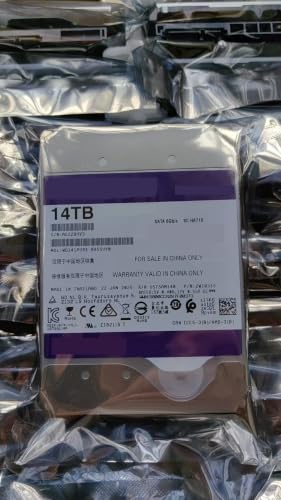
TPRRUGQTU
TPRRUGQTU 14TB 3.5-Inch 7200RPM Internal SATA III Hard Drive
A roomy 14TB of 7200RPM desktop storage on a standard 3.5-inch SATA III drive built for backups, media libraries, and archive-heavy builds
$1,076.04*
Check availability
*Price sourced from Amazon.com. Last updated:Aug 17, 2026.Price and availability are subject to change — details.
Affiliate Disclosure: As an Amazon Associate, Studio Supplies earns from qualifying purchases made through links on this page, at no additional cost to you. This helps support our editorial team.
Notice a mistake? Let Us Know
Overview
Key Features
External Hard Drives
HDD 14TB Hard Disk 3.5" 7200RPM SATAIII140PURZ 141PUR
Specifications
Brand
TPRRUGQTU
Capacity
14TB
Form Factor
3.5 inch
Spindle Speed
7200RPM
Interface
SATA III
Drive Type
Mechanical HDD
Model References
SATAIII140PURZ / 141PUR
Frequently Asked Questions
Is the TPRRUGQTU 14TB drive an internal or external hard drive?
It is a bare internal 3.5-inch drive with a SATA III connector, so it installs in a desktop bay or an external dock rather than plugging in over USB on its own.
How fast does this 14TB drive spin?
It runs at 7200RPM, the faster of the two speeds common to 3.5-inch mechanical drives, which generally aids sustained transfers of the large files it is built to store.
Will this drive work with my desktop computer?
If your motherboard or enclosure has a SATA III port and a standard 3.5-inch bay, it should connect directly, since SATA III is the near-universal desktop storage interface.
Is 14TB enough for a media server or backup archive?
Yes, 14 terabytes offers substantial room to consolidate large video libraries, photo collections, and backups that would otherwise span several smaller disks.
Does the listing mention cache size or warranty coverage?
No, the provided details do not specify cache, workload rating, or warranty terms, so it is worth confirming those figures with the seller before purchasing.
Can this replace a solid-state drive for everyday speed?
No, as a mechanical platter drive it prioritizes capacity and cost per terabyte over the fast random access an SSD delivers for boot drives and applications.
Related Products
