Western Digital

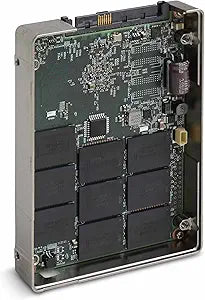
Western Digital 0B32280 Ultrastar 250GB SAS SSD - Enterprise Grade

Enterprise MLC SAS SSD delivering exceptional IOPS and endurance with built-in encryption for mission-critical data center workloads.

Check availability
Affiliate Disclosure: Studio Supplies may earn a commission from qualifying purchases made through links on this page, at no additional cost to you. This helps support our editorial team.

Notice a mistake? Let Us Know

Overview

The Western Digital Ultrastar SSD1600MR (model 0B32280), originally developed under the HGST brand, is a 2.5-inch enterprise solid-state drive built around MLC NAND flash technology. MLC NAND is prized in enterprise environments for its superior write endurance and data retention characteristics compared to the TLC and QLC technologies used in most consumer drives. Paired with a 12Gb/s SAS interface, the SSD1600MR is designed to deliver high sequential throughput and strong random IOPS performance in storage arrays, virtualization hosts, and database servers where consistent low-latency access to data is essential.

Beyond raw performance, the drive incorporates features that address enterprise reliability and compliance requirements. Advanced power loss data management technology safeguards data integrity during unexpected power events—a critical capability in data centers where even brief outages can corrupt in-flight transactions. Self-encrypting models conform to the Trusted Computing Group's Enterprise specification with FIPS compliance, enabling hardware-based encryption that secures data at rest without placing additional load on host processors. The drive's optimized IOPS-per-watt ratio also contributes to lower total cost of ownership in high-density deployments where power and cooling budgets are tightly managed. At 250GB, the capacity is intentionally modest, positioning this drive for roles where speed, endurance, and security outweigh the need for large-volume storage.

Key Features

MLC NAND flash for ultra-high performance and endurance

Best IOPS/Watt for reduced TCO

12Gb/s SAS interface for maximum throughput

Advanced power loss data management technology

Self-encrypting models conform to TCG's Enterprise specification

Specifications

Brand
Western Digital (HGST)
Model
0B32280
Series
Ultrastar SSD1600MR
Capacity
250GB
Interface
12Gb/s SAS
Form Factor
2.5-inch
NAND Flash Type
MLC (Multi-Level Cell)
Encryption
Self-Encrypting, TCG Enterprise, FIPS
Power Loss Protection
Advanced Power Loss Data Management
Type
Internal SSD

Pros & Cons

👍 Pros

  • MLC NAND delivers higher write endurance than TLC or QLC drives for sustained enterprise workloads
  • 12Gb/s SAS interface provides maximum throughput for data center storage arrays
  • Advanced power loss data management protects in-flight writes during unexpected outages
  • Self-encrypting capability with TCG Enterprise and FIPS compliance secures data at the hardware level
  • Industry-leading IOPS-per-watt ratio helps reduce total cost of ownership in dense deployments

👎 Cons

  • 250GB capacity is small by current SSD standards and limits use to performance-tier caching or boot roles
  • SAS interface is not compatible with standard consumer SATA or NVMe systems
  • Premium enterprise pricing makes this drive significantly more expensive per gigabyte than consumer SSDs
  • Limited to environments with 2.5-inch SAS-compatible drive bays

Frequently Asked Questions

It uses MLC (Multi-Level Cell) NAND flash, which offers a strong balance of high performance, endurance, and data retention compared to TLC or QLC alternatives commonly found in consumer drives.
Yes, self-encrypting models conform to the Trusted Computing Group (TCG) Enterprise specification with FIPS compliance, providing hardware-level data protection without impacting drive performance.
The drive features advanced power loss data management technology designed to protect in-flight data and maintain data integrity in the event of sudden power interruptions.
It uses a 12Gb/s SAS interface for maximum throughput. SAS interfaces are generally backward compatible with earlier SAS generations, though throughput will be limited to the slower interface speed.