

EVGA
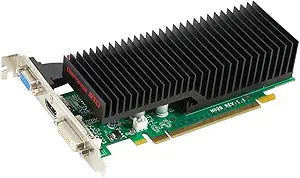
EVGA 512-P3-1213-LR GeForce 210 DDR2 Graphics Card
Entry-Level Graphics for Essential Computing The EVGA GeForce 210 Graphics Card offers basic graphics capabilities for essential computing tasks and multimedia playback. Key Features Chipset: GeForce 210 with 589 MHz core clock Memory: 512 MB of DDR2 memory Memory Clock: 800 MHz...
$49.99*
View on Amazon
✓ In Stock on Amazon.com
*Price sourced from Amazon.com. Last updated:Sep 12, 2026.Price and availability are subject to change — details.
Affiliate Disclosure: As an Amazon Associate, Studio Supplies earns from qualifying purchases made through links on this page, at no additional cost to you. This helps support our editorial team.
Notice a mistake? Let Us Know
Overview
Entry-Level Graphics for Essential Computing
The EVGA GeForce 210 Graphics Card offers basic graphics capabilities for essential computing tasks and multimedia playback.
Key Features
- Chipset: GeForce 210 with 589 MHz core clock
- Memory: 512 MB of DDR2 memory
- Memory Clock: 800 MHz memory clock and 1402 MHz shader clock
- Interfaces: PCI Express 2.0, HDMI, DVI-I, and VGA interfaces
- Cooling: Passive Heatsink
Specifications
- Chipset: GeForce 210
- Core Clock: 589 MHz
- Memory: 512 MB DDR2
- Memory Clock: 800 MHz
- Shader Clock: 1402 MHz
- Memory Interface: 64-bit
- Interfaces: PCI Express 2.0, HDMI, DVI-I, VGA
Key Features
PCI Express 2.0, HDMI, DVI-I, and VGA interfaces
GeForce GeForce 210 with 589 MHz core clock
512 MB of DDR2 memory
800 MHz memory clock and 1402 MHz shader clock
Passive Heatsink
Specifications
Model
512-P3-1213-LR
GPU
GeForce 210
Core Clock
589 MHz
Memory
512 MB DDR2
Memory Clock
800 MHz
Shader Clock
1402 MHz
Interface
PCI Express 2.0
Video Outputs
HDMI, DVI-I, VGA
Cooling
Passive Heatsink
Similar Products
Other products from the same family that visitors often consider:
 ✓ Available
EVGA 01G-P3-1313 GeForce 210 Graphics Card
$24.99
View on Amazon → ✓ Available
EVGA 01G-P3-1313-KR GeForce 210 Graphics Card
$24.99
View on Amazon → Currently Unavailable
EVGA 512-P1-N402-LR GeForce 6200 512MB DDR2 Graphics Card
Check on Amazon → Currently Unavailable
EVGA 01G-P3-N945-LR GeForce 9400 GT 1GB DDR2 Graphics Card
Check on Amazon → ✓ Available
EVGA 512-P3-1311-KR: GeForce 210 512MB DDR3 Graphics Card
$89.99
View on Amazon →Frequently Asked Questions
What type of motherboard slot is required for the EVGA GeForce 210 graphics card?
The EVGA GeForce 210 graphics card requires a PCI Express 2.0 slot on your motherboard for installation.
Can this graphics card run modern video games?
With a GeForce 210 GPU and 512MB DDR2 memory, this card is primarily for basic display output and not suitable for running modern, graphically demanding video games.
What display outputs are available on this EVGA graphics card?
This graphics card offers HDMI, DVI-I, and VGA interfaces, providing compatibility with a wide range of monitors.
Does this graphics card require a separate power connector from the power supply?
The specifications do not indicate a requirement for a separate power connector, suggesting it draws power directly from the PCIe slot.
How does the passive heatsink cooling work on this card?
A passive heatsink cools the card without a fan, relying on the natural convection of air, which makes the card completely silent during operation.
Is the 512 MB DDR2 memory sufficient for graphic design work?
The 512 MB DDR2 memory is generally not sufficient for professional graphic design work or complex visual applications, which require more robust VRAM.
What is the advantage of having a passive heatsink on a graphics card?
The main advantage of a passive heatsink is silent operation, making it ideal for systems where noise reduction is a priority, such as home theater PCs.
Related Products


