

Gigabyte
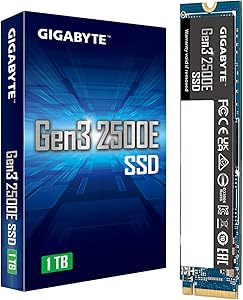
Gigabyte G325E1TB 1TB NVMe M.2 Internal SSD
1TB NVMe
Supercharge Your System with Blazing-Fast Storage Introducing the Gigabyte Gen3 2500E SSD, a high-performance 1TB NVMe M.2 internal solid-state drive designed to accelerate your computing experience. Experience significantly reduced loading times and improved system responsiveness, making it perf...
$216.90*
View on Amazon
✓ In Stock on Amazon.com
*Price sourced from Amazon.com. Last updated:Aug 28, 2026.Price and availability are subject to change — details.
Affiliate Disclosure: As an Amazon Associate, Studio Supplies earns from qualifying purchases made through links on this page, at no additional cost to you. This helps support our editorial team.
Notice a mistake? Let Us Know
Overview
Supercharge Your System with Blazing-Fast Storage
Introducing the Gigabyte Gen3 2500E SSD, a high-performance 1TB NVMe M.2 internal solid-state drive designed to accelerate your computing experience. Experience significantly reduced loading times and improved system responsiveness, making it perfect for gaming, content creation, and demanding applications.
Specifications:
- Form Factor: M.2 2280
- Interface: PCI-Express 3.0 x4, NVMe 1.3
- Total Capacity: 1000GB (1TB)
- Sequential Read Speed: Up to 2400 MB/s
- Sequential Write Speed: Up to 1800 MB/s
- HMB (Host Memory Buffer): Supported
- TRIM & S.M.A.R.T Support: Yes
- Energy-Efficient: Yes
Key Features
Form Factor: M.2 2280
Interface: PCI-Express 3.0 x4, NVMe 1.3
Total Capacity: 1000GB
Sequential Read Speed : up to 2400 MB/s
Sequential Write speed : up to 1800 MB/s
HMB (Host Memory Buffer) supported
TRIM & S.M.A.R.T support
Energy-Efficient
Specifications
Form Factor
M.2 2280
Interface
PCI-Express 3.0 x4, NVMe 1.3
Total Capacity
1000GB
Sequential Read Speed
up to 2400 MB/s
Sequential Write Speed
up to 1800 MB/s
HMB Support
Yes
TRIM Support
Yes
S.M.A.R.T Support
Yes
Energy Efficiency
Energy-Efficient
Similar Products
Other products from the same family that visitors often consider:
 Currently Unavailable
Gigabyte GP-AG41TB 1TB AORUS Gen4 NVMe SSD
Check on Amazon → Currently Unavailable
Gigabyte GP-GSM2NE3100TNTD 1TB NVMe PCIe Gen3 SSD
Check on Amazon → Currently Unavailable
Gigabyte GP-AG70S1TB AORUS Gen4 1TB NVMe SSD
Check on Amazon → ✓ Available
Gigabyte GP-AG41TB AORUS Gen4 1TB NVMe SSD
$249.99
View on Amazon → Currently Unavailable
Gigabyte GP-VSD1TB External SSD: 1TB USB 3.2 Gen2x2, Military Grade
Check on Amazon →Frequently Asked Questions
What is the capacity of the Gigabyte G325E1TB SSD?
The Gigabyte G325E1TB NVMe M.2 Internal SSD offers a generous total capacity of 1000GB, or 1TB, providing ample space for operating systems, applications, and large files.
How fast can this SSD transfer data?
This SSD boasts sequential read speeds of up to 2400 MB/s and sequential write speeds of up to 1800 MB/s, contributing to faster system responsiveness and quicker file operations.
What type of interface and form factor does this SSD use?
The Gigabyte G325E1TB utilizes an M.2 2280 form factor and connects via a PCI-Express 3.0 x4, NVMe 1.3 interface, which is standard for many modern motherboards and laptops.
Does this SSD have any features to improve its performance without extra hardware?
Yes, it supports HMB (Host Memory Buffer), which allows the SSD to use a small portion of the host system's DRAM to improve performance, typically found in DRAM-less SSD designs.
Is the Gigabyte G325E1TB SSD energy-efficient?
Yes, the product description indicates that this SSD is designed to be energy-efficient, which can contribute to lower power consumption in a system.
What are TRIM and S.M.A.R.T support for this SSD?
TRIM support helps the operating system inform the SSD which data blocks are no longer in use, allowing for efficient garbage collection and sustained performance. S.M.A.R.T (Self-Monitoring, Analysis, and Reporting Technology) support enables the drive to monitor its own health and report potential issues.
Related Products


