


G.Skill
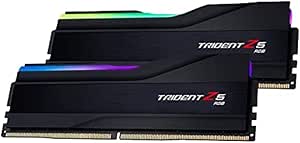
G.Skill F5-6000J3238F16GX2-TZ5RK 32GB Trident Z5 RGB DDR5 6000MHz
DDR5-6000 at CL32 — the Trident Z5 RGB hits the sweet spot where latency tightens and throughput peaks for Intel platforms.
$782.51*
View on Amazon
✓ In Stock on Amazon.com
*Price sourced from Amazon.com. Last updated:Oct 18, 2026.Price and availability are subject to change — details.
Affiliate Disclosure: As an Amazon Associate, Studio Supplies earns from qualifying purchases made through links on this page, at no additional cost to you. This helps support our editorial team.
Notice a mistake? Let Us Know
Overview
Key Features
4713294231284
F5-6000J3238F16GX2-TZ5RK
Specifications
Capacity
32GB (2x16GB)
Type
DDR5
Speed
6000MHz
Timings
CL32-38-38
Series
Trident Z5 RGB
Brand
G.Skill
Model
F5-6000J3238F16GX2-TZ5RK
Configuration
Dual Channel Kit
Similar Products
Other products from the same family that visitors often consider:
 ✓ Available
G.Skill F5-6000J3040F16GA2-TZ5RK Trident Z5 RGB 32GB DDR5 6000MHz RAM
$599.99
View on Amazon → Currently Unavailable
G.Skill Trident Z5 RGB - 32GB (2x16GB) DDR5 6000MHz Memory
Check on Amazon → ✓ Available
G.Skill F5-6000J3038F16GX2-TZ5NR Trident Z5 Neo RGB 32GB DDR5 6000MHz
View on Amazon → Currently Unavailable
G.Skill F5-6000J3636F16GA2-TZ5K Trident Z5 DDR5 32GB 6000MHz
Check on Amazon → Currently Unavailable
G.Skill F5-6000U4040E16GA2-TZ5S Trident Z5 32GB DDR5 6000MHz
Check on Amazon →Frequently Asked Questions
Is DDR5-6000 CL32 actually better than slower DDR5 with tighter timings, or is raw speed the primary gain?
DDR5-6000 CL32 lands in the performance sweet spot for current Intel platforms. The combination of high frequency and relatively tight primary timings means real-world bandwidth and latency are both competitive — you're not trading one for the other. On AMD Ryzen 7000, DDR5-6000 also aligns with the EXPO-optimized FCLK range for best performance.
Does this kit require XMP 3.0 profile activation to run at 6000MHz?
Yes. Without enabling XMP 3.0 (or EXPO for AMD) in your BIOS, the kit defaults to JEDEC speeds — typically DDR5-4800 at stock voltage. You must manually enable the XMP profile to reach the rated 6000MHz and CL32-38-38 timings.
Will this 32GB kit (2x16GB) run in dual-channel mode, and does it matter for performance?
Install both sticks in the correct paired slots (typically A2 and B2 — check your motherboard manual) and they'll run dual-channel automatically. Dual-channel roughly doubles memory bandwidth compared to single-channel, which is meaningfully impactful for integrated graphics and bandwidth-hungry workloads like video editing and data processing.
What voltage does this kit run at, and is it safe for 24/7 operation?
G.Skill's Trident Z5 DDR5 kits typically operate at 1.35V for the XMP profile — within safe limits for DDR5 and well-tested for continuous operation. The specific voltage for this kit should be confirmed in the product specs, as DDR5 VDD varies across the lineup.
Is the RGB lighting addressable, and does it work without proprietary software?
The Trident Z5 RGB uses G.Skill's own Trident Z Lighting Control software and also supports motherboard RGB sync ecosystems (ASUS Aura Sync, MSI Mystic Light, Gigabyte RGB Fusion, ASRock Polychrome). It will function as default static lighting without any software installed — software is only needed for custom effects.
Related Products


