



MSI
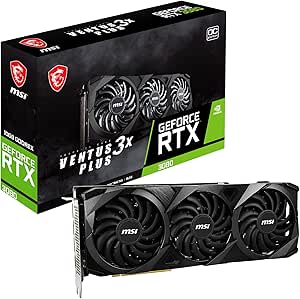
MSI RTX 3080 Ventus 3X Plus 10G OC Gaming Graphics Card
Ampere architecture with 10GB GDDR6X on a 320-bit bus — the RTX 3080 still delivers 4K-capable rasterization performance at a renewed price point.
View price on Amazon
Affiliate Disclosure: As an Amazon Associate, Studio Supplies earns from qualifying purchases made through links on this page, at no additional cost to you. This helps support our editorial team.
Notice a mistake? Let Us Know
Overview
Specifications
Model
RTX 3080 Ventus 3X Plus 10G OC
VRAM
10GB
Similar Products
Other products from the same family that visitors often consider:
 ✓ Available
MSI RTX 3080 VENTUS 3X 10G OC Gaming Graphics Card Renewed
$788.99
View on Amazon → ✓ Available
MSI RTX 3080 Ti VENTUS 3X 12G OC Gaming Graphics Card
$1,295.00
View on Amazon → ✓ Available
MSI GeForce RTX 3080 VENTUS 3X OC LHR Graphics Card
$725.00
View on Amazon → Currently Unavailable
MSI RTX 3060 Ti Ventus 3X OC Gaming Graphics Card
Check on Amazon → ✓ Available
MSI RTX 3080 VENTUS 3X PLUS 10GB OC LHR Graphics
$759.00
View on Amazon →Frequently Asked Questions
What does the LHR designation mean, and does it affect gaming performance?
LHR stands for Lite Hash Rate — a hardware-level limiter NVIDIA introduced to reduce cryptocurrency mining efficiency on this GPU. It has no effect on gaming, rendering, or any conventional workload. For gamers and creative professionals, the LHR version performs identically to the non-LHR RTX 3080.
What does the 320-bit memory interface mean for actual gaming performance?
The 320-bit bus width, combined with 10GB of GDDR6X memory, gives the RTX 3080 one of the highest memory bandwidth figures in its generation — roughly 760 GB/s. In practice, this means the card handles high-resolution texture streaming at 4K without the memory bandwidth bottlenecks that affect narrower-bus cards. You'll see the benefit most clearly in GPU-limited scenarios at 1440p and 4K.
How does the Ventus 3X Plus cooling system perform under sustained gaming load?
The TORX Fan 3.0 triple-fan configuration on the Ventus 3X Plus is MSI's workmanlike cooler — designed for sustained thermals rather than minimum noise. It runs quieter than the standard Ventus 3X but louder than MSI's Gaming X Trio premium tier. Expect mid-80°C junction temperatures under heavy load in a well-ventilated case, which is within NVIDIA's thermal spec.
Does this card support NVLink for multi-GPU configurations?
Yes, NVLink is supported on this card. However, practical NVLink support in games and applications has diminished significantly — most titles and workloads no longer benefit from multi-GPU configurations, and driver support has been reduced. NVLink is primarily relevant for specific professional compute workloads today.
What power supply wattage is recommended for this GPU?
NVIDIA recommends a minimum 750W PSU for RTX 3080 builds. The 3080 draws up to 320W under full load, so total system power consumption — including CPU, storage, and other components — needs to be accounted for. A quality 850W unit provides comfortable headroom for a high-end build.
Related Products


