AMD

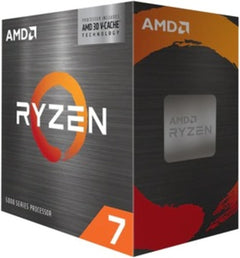
AMD AMD Ryzen 7 7800X3D Gaming Desktop Processor

4.9 (4512 reviews)
Ryzen 7 7800X3D

Dominate the Game with Unrivaled Processing Power The AMD Ryzen 7 7800X3D is a powerhouse gaming processor featuring AMD 3D V-Cache™ Technology, delivering exceptional performance and low latency for an immersive gaming experience. Whatever your game or resolution, this processor ensures you lead...

$339.00*$449.00Save 24%
In Stock on Amazon.com
View on Amazon

*Price sourced from Amazon.com. Last updated:Jun 03, 2026.Price and availability are subject to change.

Affiliate Disclosure: Studio Supplies may earn a commission from qualifying purchases made through links on this page, at no additional cost to you. This helps support our editorial team.

Notice a mistake? Let Us Know

Overview

Dominate the Game with Unrivaled Processing Power

The AMD Ryzen 7 7800X3D is a powerhouse gaming processor featuring AMD 3D V-Cache™ Technology, delivering exceptional performance and low latency for an immersive gaming experience. Whatever your game or resolution, this processor ensures you lead your team to victory.

Specifications:

  • Cores: 8
  • Threads: 16
  • Clock Speed: 4.20 GHz
  • Cache: 8 MB L2 + 96 MB L3
  • Graphics: AMD Radeon Graphics
  • Socket: Socket AM5
  • Process Technology: 5 nm

Key Features

Processor provides dependable and fast execution of tasks with maximum efficiency.Graphics Frequency : 2200 MHZ.Number of CPU Cores : 8. Maximum Operating Temperature (Tjmax) : 89°C.

Ryzen 7 product line processor for better usability and increased efficiency

5 nm process technology for reliable performance with maximum productivity

Octa-core (8 Core) processor core allows multitasking with great reliability and fast processing speed

8 MB L2 plus 96 MB L3 cache memory provides excellent hit rate in short access time enabling improved system performance

Processor with 4.20 GHz clock speed for reliable and fast execution of instructions to ensure maximum convenience and feasibility

Comes with AMD Radeon Graphics controller for amazing graphics output

Specifications

Processor Line
Ryzen 7
CPU Cores
8
Process Technology
5 nm
L2 Cache
8 MB
L3 Cache
96 MB
Clock Speed
4.20 GHz
Graphics Controller
AMD Radeon Graphics
Graphics Frequency
2200 MHZ
Maximum Operating Temperature
89°C

AMD Ryzen 7 7800X3D — Editorial Review

The Ryzen 7 7800X3D is the eight-core gaming CPU that rewrote the value equation. Its trick is AMD's second-generation 3D V-Cache, which stacks extra L3 cache onto the die for a total of 96MB — and games love cache. Tom's Hardware crowned it the new desktop gaming champion at launch, beating CPUs that cost far more.

Featured Video Review

Next-Level Gaming: Unboxing & Benchmarking AMD R7 7800X3D & RX 7900 XTX in 1440p & 4K
Tech Deals · "Next-Level Gaming: Unboxing & Benchmarking AMD R7 7800X3D & RX 7900 XTX in 1440p & 4K" · Watch on YouTube

Gaming performance that punches above its price

Tom's Hardware measured the 7800X3D as roughly 12% faster on average in gaming than Intel's pricier Core i9-13900K — and up to 40% faster in some titles — while also edging out AMD's own more expensive 16-core 7950X3D in games. Digital Foundry reaches the same verdict: for a pure gaming build, this is the chip to beat, and its frame-time consistency is excellent. Tom's Hardware has continued to call it the best gaming-PC CPU at its street price. In Tech Deals' benchmarking video — featured above — the build-focused channel walks through real game numbers and frames it as the centerpiece of a gaming PC.

Efficient and easy to cool

Beyond raw speed, the 7800X3D is notably power-efficient for its gaming output, running cooler and drawing less than the high-wattage Intel parts it competes with — a real benefit for compact or quiet builds on the AM5 platform.

Honest cons

  • Gaming-specialist, not an all-rounder. Tom's Hardware/TechSpot note the non-X3D Ryzen 7 7700X is faster in threaded productivity (~7%) and single-threaded work (~15%) — for heavy rendering/compiling, a standard chip or higher core count is better value.
  • 3D V-Cache doesn't help every game equally. Gains are largest in CPU-bound titles; some games see modest differences, so check benchmarks for your specific games.
  • AM5 platform cost. It requires a newer AM5 motherboard and DDR5, adding to total build cost versus older platforms.
  • Eight cores. Plenty for gaming today, but heavy multitaskers/streamers running CPU-encoded workloads alongside games may want more cores.

Where this CPU fits

  • Gamers building a high-FPS PC who want the best gaming performance per dollar without paying flagship prices.
  • Compact and quiet builds that benefit from its efficiency and lower heat output.
  • AM5 upgraders who value a long-lived socket and top gaming results from an eight-core chip.
  • Not primarily productivity/rendering machines (a 7700X, 7900X, or higher-core part offers better threaded value) or buyers wanting to avoid the AM5/DDR5 platform cost.

Sources & Citations

  1. Tom's Hardware, "AMD Ryzen 7 7800X3D Review: New Gaming Champ Beats Pricier CPUs," tomshardware.com (accessed 2026-05-25)
  2. Digital Foundry / Eurogamer, "AMD Ryzen 7 7800X3D review," eurogamer.net (accessed 2026-05-25)
  3. Tom's Hardware, "AMD's Ryzen 7 7800X3D, the best CPU for a gaming PC," tomshardware.com (accessed 2026-05-25)

Last verified: 2026-05-25

How to Swap a CPU on an AM5 Motherboard (Ryzen 7000 / 9000)

AMD's AM5 platform (LGA 1718 socket) carries AMD's official support commitment through at least 2027, making it the right upgrade foundation for Ryzen 7000 and 9000 series CPUs. Unlike AM4's PGA design where pins are on the CPU, AM5 is an LGA (Land Grid Array) socket: the 1718 contact pins are on the motherboard, and the CPU has flat gold contact pads. This means CPU handling is more forgiving — a dropped AM5 CPU does not risk bent pins — but the socket itself requires careful protection from bare metal tools. According to TechPowerUp's Ryzen 7 7800X3D review, the 3D V-Cache architecture delivers gaming performance that exceeds non-X3D parts at much higher price points. The 9800X3D adds Zen 5 IPC gains to that foundation, earning top gaming benchmark scores in TechPowerUp's independent testing.

BIOS Update Prerequisite for Ryzen 9000-Series

Installing a Ryzen 9000-series (Zen 5) CPU on a 600-series AM5 board (X670, X670E, B650, B650E) requires AGESA 1.2.0.2 or later. Without the correct firmware, the board will not POST. Check the board's CPU Support List on the manufacturer's product page to confirm compatibility and the required BIOS revision before swapping. 700-series boards (X870, X870E, B850) typically support Ryzen 9000 out of the box. Ryzen 7000-series upgrades within the 7000 lineup generally do not require a BIOS update on 600-series boards. Use BIOS Flashback (ASUS) or equivalent to flash without a working CPU installed if needed — consult the board manual for the specific port and button combination.

Safety — Protect the Socket Pins

On AM5, the socket holds 1718 LGA contact pins. Never bring a bare metal tool, screwdriver shaft, or finger directly over the open socket. A single bent socket pin is a motherboard repair, not a CPU problem. When the retention lever is open and the CPU is removed, keep the work area clear of tools. Power off fully — flip the PSU rocker switch off, press the power button once after disconnecting to discharge capacitors, touch the bare metal chassis before reaching inside.

Tools Needed

  • Phillips #1 screwdriver (most AM5 cooler bracket screws)
  • Isopropyl alcohol 90%+ and lint-free cloth (thermal paste removal)
  • Fresh thermal paste
  • Contact frame (optional — addresses IHS flatness variation on some early AM5 boards)

Installation Steps

  1. Back up BIOS settings and note the EXPO profile — DDR5 EXPO profile number and frequency reset after a CPU swap. Write them down or photograph the BIOS screen. Re-enabling EXPO after the swap is the most commonly missed step.
  2. Update BIOS if needed — for Ryzen 9000-series on 600-series boards, flash the required AGESA version with the current CPU installed before proceeding.
  3. Power off and discharge — shut down through the OS, flip the PSU switch off, press the power button once, touch the chassis before reaching inside.
  4. Remove the cooler — loosen screws diagonally, twist gently to break paste bond, lift straight up. Disconnect the CPU fan header.
  5. Clean IHS and cooler base — isopropyl alcohol on a lint-free cloth until both surfaces are clean and dry.
  6. Release the retention lever and frame — push the lever down and away from the latch, raise the retention frame. Lift the CPU out by its edges. Inspect socket pins under bright light — all pins should be uniformly straight.
  7. Install the new CPU — locate the orientation notch on the CPU edge. Align with the socket key and lower the CPU flat. It should seat without lateral force. Lower the retention frame and lever. Moderate resistance when latching is normal.
  8. Apply thermal paste and remount the cooler — pea-sized dot or light X-pattern at the center of the IHS. Most AM5 coolers use AM4-compatible mounting geometry. Tighten screws diagonally in multiple passes. Reconnect the fan header.
  9. Boot to BIOS, verify CPU detection — check that the correct model name and core count appear. Wrong or generic CPU name means the BIOS microcode doesn't support the new chip; flash required before continuing.
  10. Re-enable EXPO — memory runs at JEDEC baseline after a CPU swap. Navigate to memory settings, re-enable the EXPO profile, confirm the expected frequency. The first POST can take 60–90 seconds as the AM5 IMC re-trains DDR5 — this is normal. Do not reset during this window.
  11. Boot to OS and update chipset drivers — install the latest AMD chipset driver package from AMD's support and downloads page. Reboot after installation.

Troubleshooting in Brief

  • 60–90 second POST delay after swap: Normal. AM5 IMC re-trains DDR5 on first boot with a new CPU. Wait it out — do not press reset.
  • BIOS shows wrong CPU name: BIOS microcode does not support the new CPU. Flash the required firmware update.
  • 7800X3D or 9800X3D reading 89°C at full load: Normal — AMD's official Tjmax for these 3D V-Cache parts is 89°C. Per TechPowerUp's reviews, full boost clocks are maintained up to this limit. Idle above 50°C at stock indicates a cooler seating problem.
  • Memory shows at JEDEC speed: EXPO was not re-enabled. Re-enable in BIOS memory settings.

AM5 Platform Longevity

AMD committed to AM5 support through at least 2027, with Zen 5 (Ryzen 9000) not the last architecture planned for the platform. Users investing in AM5 now have a viable upgrade path for additional CPU generations without a platform change. According to AnandTech's review of the 7800X3D architecture, the AM5 IMC's DDR5 implementation offers stable EXPO support with current firmware — a meaningful improvement over early-launch behavior. The combination of DDR5 headroom and AM5's longevity makes the platform a well-positioned base for multi-generational CPU upgrades.

The full guide with BIOS update procedures, LGA socket handling, pin inspection, DDR5 EXPO re-enable, and complete troubleshooting is at studio-supplies.com/blogs/guides/cpu-swap-am5-ryzen-upgrade-guide.

Sources & Citations

  1. AMD, "Ryzen 7000 Series Desktop Processors," amd.com (accessed 2026-05-31)
  2. AMD, "Ryzen 7 7800X3D Specifications," amd.com (accessed 2026-05-31)
  3. AMD, "Ryzen 7 9800X3D Specifications," amd.com (accessed 2026-05-31)
  4. TechPowerUp, "AMD Ryzen 7 7800X3D Review," techpowerup.com (accessed 2026-05-31)
  5. TechPowerUp, "AMD Ryzen 7 9800X3D Review," techpowerup.com (accessed 2026-05-31)
  6. AnandTech, "The AMD Ryzen 7 7800X3D Review," anandtech.com (accessed 2026-05-31)
  7. AMD, "AM5 Platform Support FAQ," amd.com (accessed 2026-05-31)

Last verified: 2026-05-31

Now that you've seen the details — ready to take a closer look?

View on Amazon

Similar Products

Other products from the same family that visitors often consider:

Pros & Cons

👍 Pros

  • Provides dependable and fast execution of tasks with maximum efficiency, enhancing overall system performance.
  • Utilizes 5 nm process technology for reliable performance and improved productivity.
  • Features an Octa-core (8 Core) processor, enabling robust multitasking capabilities and quick processing speeds.
  • Includes a substantial 8 MB L2 plus 96 MB L3 cache memory for excellent hit rates and improved system responsiveness.
  • Operates with a 4.20 GHz clock speed, ensuring reliable and fast execution of instructions for smooth operation.
  • Comes with an integrated AMD Radeon Graphics controller, offering solid graphics output without a discrete GPU.

👎 Cons

  • The specified graphics frequency of 2200 MHZ, while integrated, may not match the performance of high-end dedicated graphics cards for demanding games.
  • The maximum operating temperature (Tjmax) of 89°C requires effective cooling solutions to maintain optimal performance and longevity.
  • Users seeking the absolute highest clock speeds for single-threaded tasks might find other processors with higher base or boost clocks.
  • The 5 nm process technology, while efficient, implies a need for a compatible, modern motherboard platform (likely AM5 for Ryzen 7000 series).
  • The specific amount of power consumption is not listed, which might be a consideration for users building a system with a limited power supply.

Frequently Asked Questions

The AMD Ryzen 7 7800X3D processor is an Octa-core (8 Core) processor, which allows for reliable multitasking and fast processing.
The processor operates with a 4.20 GHz clock speed, ensuring reliable and fast execution of instructions.
Yes, it comes with an AMD Radeon Graphics controller for amazing graphics output, with a Graphics Frequency of 2200 MHZ.
This processor utilizes 5 nm process technology for reliable performance with maximum productivity.
It features 8 MB of L2 cache plus a substantial 96 MB of L3 cache memory, which provides an excellent hit rate for improved system performance.
The maximum operating temperature (Tjmax) for the AMD Ryzen 7 7800X3D is 89°C.